
An important piece of Abraham Lincoln’s legacy was nearly lost in 2023, but an intrepid group of citizens of Mount Pleasant, Iowa saved it. Now, the non-profit Harlan-Lincoln House, Inc., Board of Directors is working to build both a sustainable organization and an enduring and recognized historical site, and is looking for assistance in terms of guidance, fundraising, scholarship, and publicity.
The Harlan-Lincoln House was the home of U.S. Senator James Harlan, a friend and political confidante of President Abraham Lincoln. Harlan’s daughter Mary married Lincoln’s oldest son Robert, and the Civil War president’s grandchildren were constant visitors to the house in Mount Pleasant. “So very restful,” Mary Harlan Lincoln said of her father’s home, “and so good for the children growing up.”
The house was given to Iowa Wesleyan University by Mary Harlan Lincoln in 1907, after which it was used for housing and academic purposes for decades before being turned into a museum in 1959. It was added to the U.S. Register of Historic Places in 1973.

“It’s a midwestern family story that has national prominence,” said Elizabeth Garrels, chair of the Harlan-Lincoln House, Inc. Board of Directors, and a former trustee of Iowa Wesleyan University. “It’s James Harlan’s story of public service, his friendship with the most beloved president ever, and a unique place often visited by the Lincoln descendants — all of these make it a real treasure.”
James Harlan, like Abraham Lincoln, was a product of Illinois and Indiana before becoming a lawyer. Unlike Lincoln, Harlan was well educated, and spent time as a teacher and college president before being elected to the U.S. Senate in 1855. Harlan was a political supporter and friend of President Lincoln, and in 1865 was nominated by Lincoln to be Secretary of the Interior. Harlan served in that role for one year under President Andrew Johnson, but resigned in protest of Johnson’s reconstruction policies. Harlan returned to the Senate in 1867, where he served until losing reelection in 1872.

During his “retirement” years after returning home to Mount Pleasant, Harlan remained politically active in the Republican Party, served as a trustee of Iowa Wesleyan University (the institution he formerly presided over), and served four years as chief judge of the second court of Alabama claims. He died in 1899.
The Harlan and Lincoln families became intertwined in 1868 when Mary Harlan married Robert Lincoln — a match specifically cultivated by First Lady Mary Lincoln. The Lincolns had three children — Mary (born 1869), Abraham II (born 1872), and Jessie (born 1875) — and Mary and the children spent multiple weeks of every year (often entire summers) staying with the Harlan grandparents in their Iowa home. Stories of the Lincoln children frolicking around Mount Pleasant are legion, and the house still contains numerous relics of their childhood, including their tennis net, a rock collection, and even the children’s heights and ages marked in pencil on a doorframe. As the children got older, Mount Pleasant also became the place Mary Harlan Lincoln sorted through her deceased mother-in-law’s sixty trunks of possessions, where Jessie met the college baseball player she later scandalously eloped with, and even where Jessie’s second child was stillborn and buried.
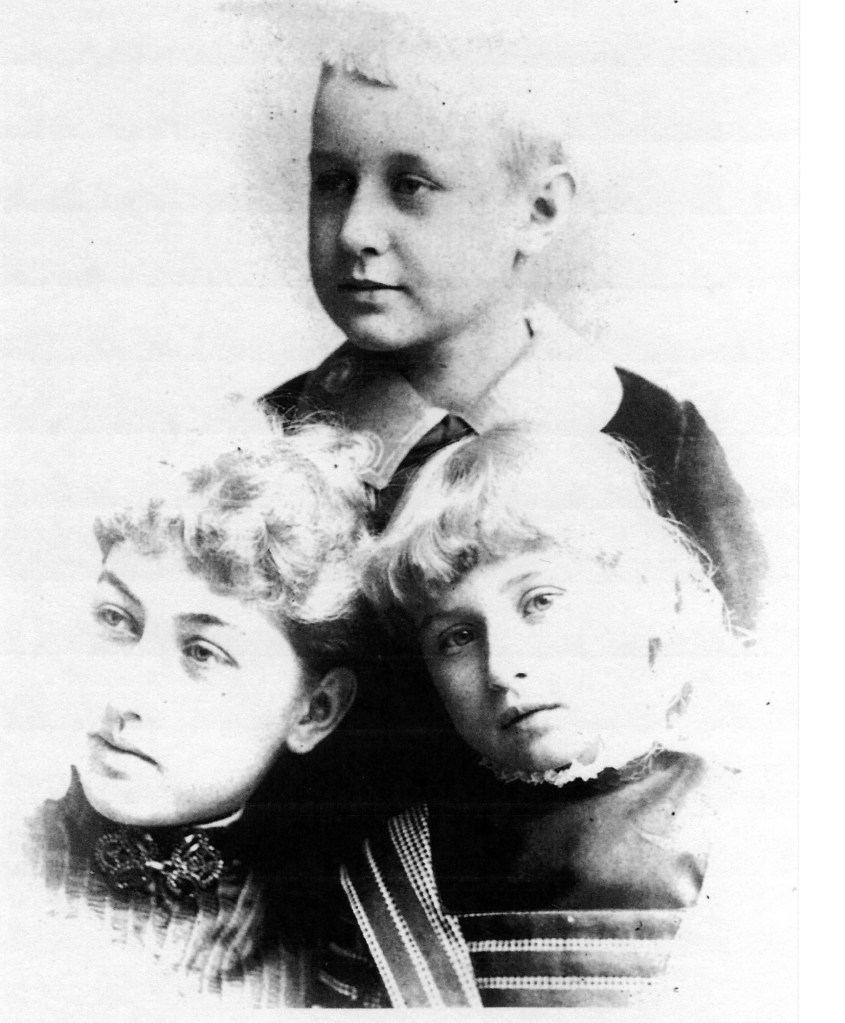
“A lot of people have questions about the descendants of Abraham Lincoln and who they were, and we are in a position to answer those questions,” said historian Paul Juhl, author of the book The James Harlan and Robert Todd Lincoln Families’ Mount Pleasant Memories and a member of the Harlan-Lincoln House, Inc. Board of a Directors. “This site is a little-known part of the Lincoln story.”
While not a part of the typical Lincoln trail of historic sites in Illinois, Indiana, Kentucky, and Washington, D.C., the Harlan-Lincoln House attracted many visitors every year and was a jewel of Iowa Wesleyan University, sitting on the north side of the campus. Lincoln-themed lectures and events were held in the university’s chapel annually, while visitors to Mount Pleasant typically took time to visit the house connected so tangibly to the Lincoln family, particularly to see the piece of Abraham Lincoln’s coat from the night he was assassinated and one of Mary Lincoln’s mourning veils, both of which are part of the site’s collections.
When Iowa Wesleyan was forced to close in spring 2023 due to declining enrollment and lack of funds, the future of the Harlan-Lincoln House — and all the historical artifacts and archives contained within it — was uncertain. But after six months of discussions, the university transferred ownership of the house and its contents to newly formed non-profit last October.
“We are really quite pleased with the conclusion,” said Garrels. “We appreciate the fact that we have this house to share — it could have gone other ways.”
The mission of the Harlan-Lincoln House, Inc. is to preserve and promote the house and its contents, highlighting its relevance to the James Harlan and Abraham Lincoln families, and “to explain the significant impact of these prominent American families who offered vital leadership for the life of Iowa Wesleyan University, community of Mount Pleasant, state of Iowa, and the nation.”
But with ownership comes responsibilities. All of the financial and personnel resources needed to run the historic site, which were previously provided by the university, are now the burden of the non-profit. “None of us ever thought we’d be in this position,” said Garrels about the new board of directors. “We’re working to get our feet on the ground, get the site launched with docents, publicity, and being open regularly for visitors.” There is also the ever-present need for fundraising, and the goal to make the Harlan-Lincoln House an inviting tourist destination for Lincolnphiles.
“We’re not that far from Springfield and the Lincoln sites in Illinois, only about three hours,” Juhl said. “It’s a nice day trip that we do with bus groups, and we hope people will realize we’re out here and come visit.”
For more information on the Harlan-Lincoln House and its future endeavors, visit the website at https://harlanlincoln.org or email Elizabeth Garrels at regarrels@iowatelecom.net.
 www.jasonemersonhistorian.com